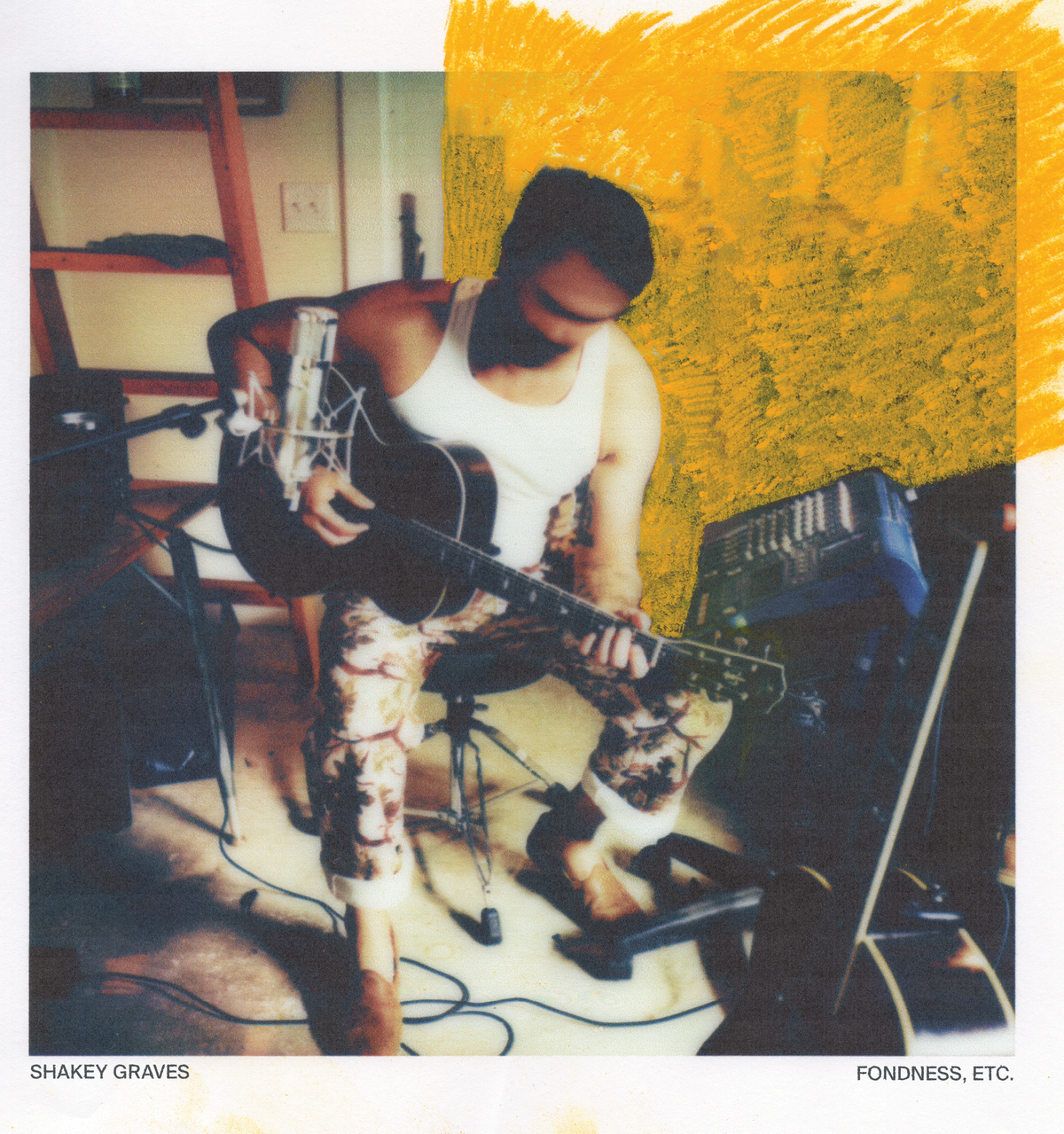
Shakey Graves FONDNESS, ETC. Album Review
"A dreamscape of intimate introspection"
Ten or so years ago, I was driving with my family through Nova Scotia. Looking for some tunage to flavor the ride, we scanned stations. A duet with extremely catchy and playful lyrics and a warm, familiar chord progression piqued my curiosity. I remember scrambling for a napkin and pen to jot down Dearly Departed. The song instantly solidified itself as a timeless number that evoked deep feelings of bittersweet nostalgia. Discovering Shakey Graves felt like discovering part of myself.
Being a young guitarist who tended to hang on playful lyricism, Dearly Departed seemed at home in my repertoire of cover tunes. It served me well over the years, garnering praise from multitudes of strangers. The playful charm imbued in the number added layers of dimension to my musical experience.
I checked in year after year, albeit my musical leanings shifted greatly and eventually my interests took me in new directions. Fast forward to 2026, and I am delighted to see Shakey has a new album. I was stoked to pick up Ol’ Shakey’s creative musings once again.
Fondness, ETC., retains a strong aesthetic. A dreamscape of intimate introspection. A grand addition to his body of work. The album can clearly be linked to his iconic style and character, yet there are some new elements at play here.
Innovative and evocative have always been words I associate with Shakey Graves. This album holds true to that but there are some departures from the young, playful Shakey I discovered many moons ago.
On a musical level, Fondness, ETC., is melodic, psychedelic, folksy, and intimate. Lyrically, the stories are contemplative and introspective. I believe this album stands apart from his other work in its intimacy, its straightforward subject matter, and in some ways, perhaps in its tempo or pacing.
Shaky begins the album with philosophical conviction. (Don’t Change a Thing) He sets the mood and perspective of the album with this track.
When the Love Is New gleans some caution, albeit not lyrically. His words guide us through the experience of novel intimacy with some whimsy, while the melody implores us to look realistically at the hallmarks of this human experience.
Time Flies is much warmer. A fond remembrance. No discord. Just close your eyes and smile. It should also be noted that this song is a cover. Multiple other sources have praised it as an authentic adaptation of the original tune, citing the addition of a string quartet.
Suddenly, strikes me with a childlike discovery, and ironically with some surprise, as I was not expecting an instrumental track; but with its strong ethereal melody, this song just feels like the natural evolution from the previous track. The absence of lyrics and the echoes of the previous tune allow the listener to melt into their own life experience.
Away It Goes, a bittersweet lament. We can hear the conviction and maturity in his tone. In many ways, it feels like a commentary on some of the challenges he has experienced regarding being a musician.
The Boilermaker feels like a peak. The introspection has led us here to this tale. A crescendo in some aspects. He pleads, “One more for the Road”, “Give me one more, Lord; I need it.” The great emotional flood, the outpouring. In a very raw and uncut way, we understand there is something else he yearns for, and we learn there is an emotional toll to be paid.
I Once Was an Ocean is wildly evocative in a much different way than the previous song, and its contrast is greatly felt. This piece stands out on some level. Emotionally Amorphous, the tune inspires a very strange feeling that ultimately feels difficult to describe. I have a sense that I’m waiting for something, or perhaps I’ve landed at some limbo-like plane. Despite this characteristic, the tune feels well placed among the tracks as a contemplative moment following the intense energy of The Boilermaker.
On My Own is a somber reflection on love, conjuring images that flicker lightly as she dances in her own direction. The theme now is extremely universal. The tone feels less specific, and it feels purposeful.
No Place to Be is the perfect bow. From all this introspection, we learn that the present moment is the highest attainment and that the challenges are worth undertaking in the end.
In this album, Shakey permits us an intimate view of his life and likewise invites us to reflect on our own similar experiences. Everything I had come to love about this artist is on full display here. The lyricism is poignant and insightful. Musically, it is innovative and compelling, with arrangements that feel unique and meaningful.
It should also be noted that there is much more information available on how he produced this album, which in its own right is extremely interesting to learn about, and some of the deeper details here are absolutely worth further investigation. Cheers!
Check out upcoming tour dates!